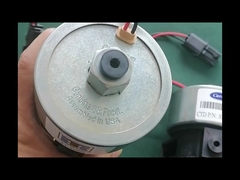
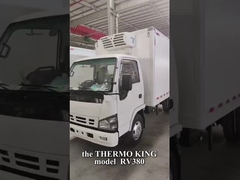
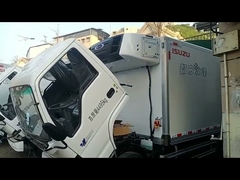
Brief: Watch this dynamic demonstration of the Carrier Citimax 400 refrigeration unit, designed for small 2.5-3.5 meter refrigerated trucks. See how it delivers reliable cooling and heating performance, learn about its 12V/24V compatibility, and get a close-up look at its key components and installation process for efficient temperature-controlled transport.
Related Product Features:
Provides a cooling capacity of 4250W at 0°C/30°C and 2200W at -20°C/30°C for versatile temperature control.
Features a heating capacity of 3730W at 12°C/-20°C to maintain cargo integrity in cold conditions.
Operates on both 12V DC (30A) and 24V DC (16A) electrical systems for flexible vehicle compatibility.
Delivers high airflow of 2000m³/h for efficient and uniform cooling throughout the truck compartment.
Equipped with a Carrier 160 compressor model for reliable and durable performance.
Designed for small refrigerated trucks with compartment volumes up to 16m³ at -20°C/40°C.
Compact evaporator dimensions of 1100×614×193 mm and weight of 22KG for space-efficient installation.
Uses R404A refrigerant with a charge weight of 1.15KG for optimal cooling efficiency.
FAQs:
What size of refrigerated truck is the Carrier Citimax 400 suitable for?
The Carrier Citimax 400 is designed for small refrigerated trucks with box lengths between 2.5 and 3.5 meters, and it can effectively cool compartments up to 16m³ in volume at -20°C/40°C conditions.
What are the electrical requirements for operating the Citimax 400 unit?
The Citimax 400 operates on both 12V DC (30A) and 24V DC (16A) systems, providing flexibility for integration with various small truck electrical setups.
What is the cooling performance of the Carrier Citimax 400 at different temperatures?
The Citimax 400 delivers a cooling capacity of 4250W at 0°C/30°C and 2200W at -20°C/30°C, ensuring reliable temperature control for a range of perishable goods.
Does the Citimax 400 offer heating functionality?
Yes, the unit includes a heating capacity of 3730W at 12°C/-20°C, which helps maintain cargo temperature and prevent freezing in colder environments.